
Introduction
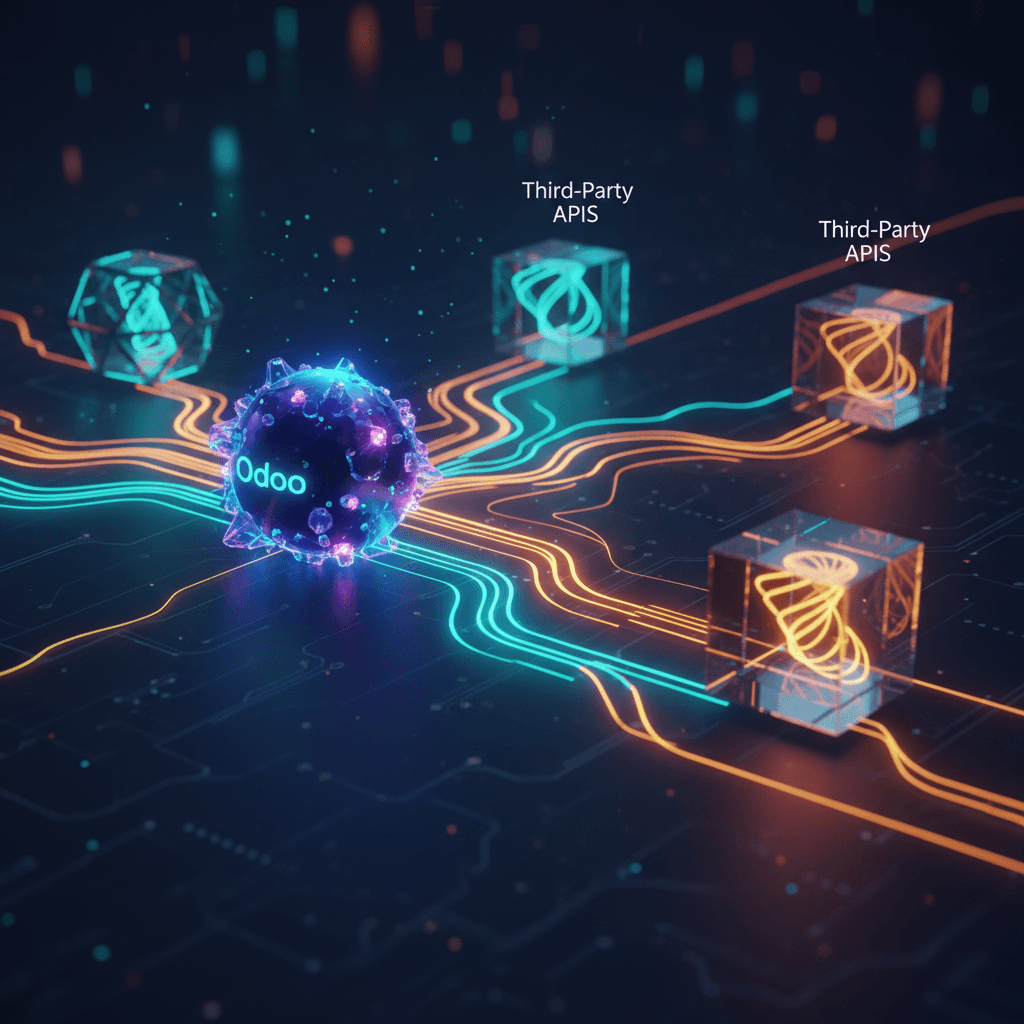
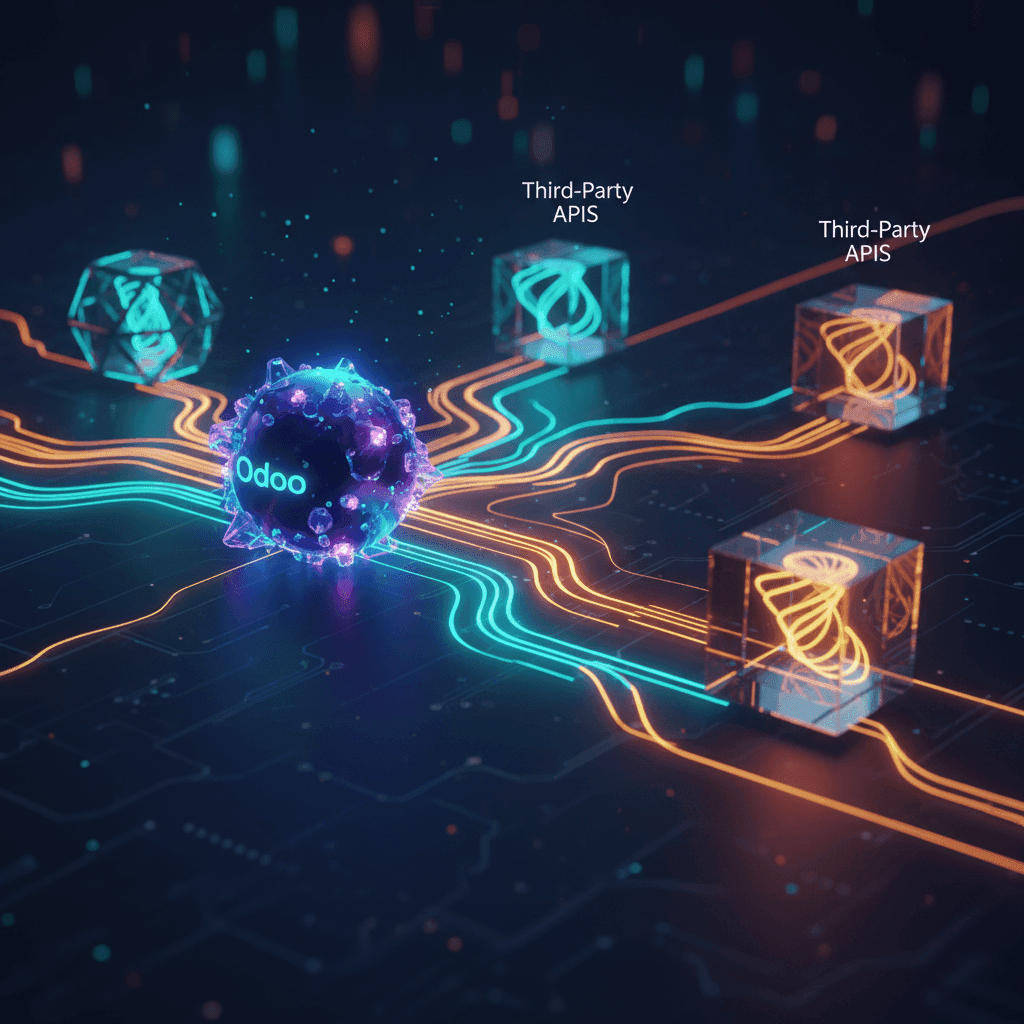
Odoo, a comprehensive suite of business applications, offers robust functionality out-of-the-box. However, to truly tailor Odoo to your specific needs and workflows, integrating it with other third-party applications is often essential. This is where Application Programming Interfaces (APIs) come into play. In this article, we'll explore how to leverage APIs to seamlessly connect Odoo with other systems, unlocking new levels of efficiency and automation.
Why It Matters
Integrating Odoo with third-party applications via APIs offers several significant advantages. Firstly, it eliminates data silos. Instead of manually transferring information between systems, APIs enable real-time data synchronization, ensuring consistency and accuracy. Secondly, it automates workflows. By connecting Odoo with other applications, you can automate tasks such as order processing, inventory management, and customer relationship management (CRM), freeing up valuable time and resources. Thirdly, it enhances functionality. APIs allow you to extend Odoo's capabilities by integrating specialized services, such as payment gateways, shipping providers, and marketing automation platforms.
Consider a scenario where you use Odoo for accounting and inventory management, and a separate e-commerce platform for online sales. Without integration, you'd need to manually update inventory levels in Odoo whenever a sale occurs on your e-commerce platform. With API integration, this process becomes automated, ensuring that your inventory data is always up-to-date.
Key Concepts
Before diving into practical examples, let's define some key concepts:
API (Application Programming Interface): A set of rules and specifications that allow different software systems to communicate and exchange data. Think of it as a digital messenger that facilitates interaction between applications.
REST (Representational State Transfer): A popular architectural style for building APIs. RESTful APIs use standard HTTP methods (GET, POST, PUT, DELETE) to perform operations on resources.
JSON (JavaScript Object Notation): A lightweight data-interchange format that is commonly used in APIs. It's human-readable and easy to parse by machines.
Authentication: The process of verifying the identity of a user or application attempting to access an API. Common authentication methods include API keys, OAuth, and JWT (JSON Web Tokens).
Odoo primarily uses RESTful APIs and supports JSON for data exchange. Understanding these concepts is crucial for successful integration.
Practical Examples
Let's look at a couple of practical examples of integrating Odoo with third-party applications:
Integrating Odoo with a Payment Gateway (e.g., Stripe): This integration allows you to automatically process payments for orders placed in Odoo. When a customer places an order, Odoo sends the payment information to Stripe via the API. Stripe processes the payment and sends a confirmation back to Odoo, updating the order status accordingly. This eliminates the need for manual payment processing and reduces the risk of errors.
Integrating Odoo with a Marketing Automation Platform (e.g., Mailchimp): This integration enables you to automatically synchronize customer data between Odoo and Mailchimp. When a new customer is created in Odoo, their information is automatically added to your Mailchimp mailing list. This allows you to send targeted email campaigns to your customers based on their purchase history and other data stored in Odoo.
These are just two examples, and the possibilities are virtually limitless. By leveraging APIs, you can connect Odoo with virtually any other application, creating a truly integrated and automated business ecosystem.
Conclusion
Integrating Odoo with third-party applications using APIs is a powerful way to streamline your business processes, enhance efficiency, and unlock new levels of functionality. By understanding the key concepts and exploring practical examples, you can begin to leverage the power of API integration to create a truly integrated and automated business ecosystem. Embrace the power of connectivity and take your Odoo experience to the next level.


